

Is Long Beach, NY Ideal for Year-Round Living?
Long Beach NY, Year-round Living, Cost Of Living, Community Amenities
Is Long Beach, NY a Good Place to Live Year-Round?
Long Beach, NY has long been known as a beloved summer escape on the South Shore of Long Island. But in 2026, more people are asking a deeper question: is Long Beach a place you can comfortably call home all year, not just from Memorial Day to Labor Day? From the high cost of living to its walkable streets, beach culture, and strong community amenities, Long Beach NY offers a distinctive lifestyle that isn’t for everyone—but can be exceptional for the right resident.
Long Beach NY at a Glance: More Than a Summer Town
Long Beach NY sits on a barrier island, offering a rare blend of coastal small-city feel and big-city access. The 2.2‑mile boardwalk, four miles of Atlantic beachfront, and compact, walkable grid give it the vibe of a classic beach town. Yet with the Long Island Rail Road (LIRR) connecting residents to Manhattan in under an hour, it also functions as a commuter-friendly base for professionals who want sand and surf without sacrificing careers in New York City.
Unlike purely seasonal resort communities, Long Beach is a true year-round living destination. Restaurants, cafes, gyms, and local shops stay open through the winter. The city invests in infrastructure, recreation, and events throughout the calendar year, not just in peak season. That said, the lifestyle here comes at a premium—especially when it comes to housing and overall cost of living.
Cost of Living: Beautiful, But Not Cheap
Any honest look at whether Long Beach NY is a good place to live year-round has to start with affordability. Multiple data sources agree: Long Beach is significantly more expensive than the U.S. average, largely driven by housing costs. Salary.com estimates that, as of mid‑2026, a single person needs around $4,268 per month to live in Long Beach, while a family of four needs roughly $9,399 per month to maintain a comparable standard of living. That’s about 72% higher than the national average and an eye‑opening 168% higher than the New York State average overall, with a modest 2% increase from 2025 (salary.com).
Other sources, such as Livingcost.org and CityCost.org, show somewhat lower monthly totals—often in the range of $2,553–$2,809 per month for a single person with rent and around $5,144–$6,520 for families of three or four. Even at the low end, Long Beach’s cost of living index comes in between 150 and 165, meaning residents pay 50–65% more than the average American for everyday life. AskDoss, for example, lists a composite index of 150, with housing at 189 and groceries, utilities, transportation, and healthcare all above 100 as well.
💡 Key Takeaway: Long Beach NY rewards residents with a high quality of life, but it’s best suited to individuals or households with solid, stable incomes—often six figures or more for comfortable year-round living.
Housing and Rent: The Biggest Line Item
If you’re evaluating Long Beach NY for year-round living, housing costs will likely make or break your decision. According to Zillow, the average home value in Long Beach is around $797,000 as of spring 2026, up just over 5% year‑over‑year. Redfin data puts the median sale price in a similar ballpark and notes that homes here are roughly 83% more expensive than the national average. Some alternative estimates, like those from Kurby.ai, are slightly lower—around $630,000—but every dataset agrees that owning in Long Beach requires a substantial budget.
Renters face a similar reality. Apartments.com and other rental trackers show:
Studios often start around $2,200–$2,600 per month.
One‑bedroom units cluster near $3,000–$3,400 per month.
Two‑bedrooms frequently land in the $4,300–$5,000+ range.
Larger three‑bedroom rentals can easily exceed $5,500 monthly.
Roughly 45% of residents are renters, and median household incomes hover between $116,000 and $126,000, depending on the source. Many locals note that even with dual incomes, it can be difficult to save aggressively once rent, childcare, transportation, and taxes are factored in. For those moving from lower‑cost regions, the sticker shock is real; for New York City or Brooklyn residents, Long Beach may feel more like a lateral move in price with a big upgrade in scenery and lifestyle.
Everyday Expenses: Groceries, Dining, and Getting Around
While housing dominates the cost of living conversation, it’s helpful to understand day‑to‑day expenses as well. Groceries in Long Beach NY typically run about 10–13% higher than the national average, according to cost indices from AskDoss and HomeSnacks. A budget meal out can cost around $20, with a mid‑range dinner for two hovering near $100. A cappuccino averages just over $5, comparable to many downstate New York communities.
Transportation is a mixed bag. On one hand, the city is compact and highly walkable, which can reduce the need for a car, especially if you live close to the LIRR station and main commercial corridors. On the other hand, parking can be tight, and car ownership adds typical Long Island costs such as insurance, tolls, and maintenance. Cost indices place transportation roughly 25–30% above the national average, but many residents offset that by walking and biking for local errands and recreation.
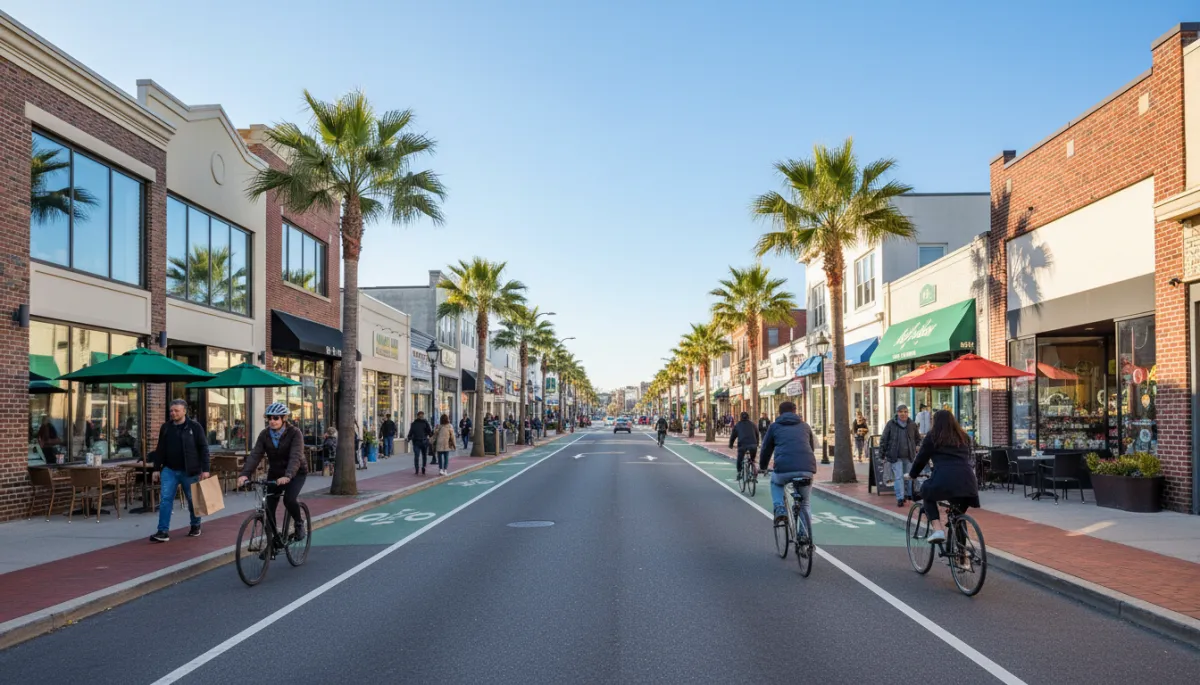
Walkability and local shops help soften higher living costs for many residents.
Community Amenities: What You Get for the Price
One of Long Beach’s strongest selling points for year‑round living is its extensive network of community amenities. The city’s Recreation Campus, run by the Parks & Recreation Department, offers an indoor municipal pool, a fitness center with weight and cardio rooms, steam room, locker facilities, and an ice arena for skating and hockey. There are turf fields, basketball courts, a roller hockey rink, skate park, fishing pier, boat launch, dog run, and a scenic bayfront promenade—all of which support an active lifestyle even in the colder months.
The Ocean Beach Park and boardwalk are the heart of daily life in warmer weather. Residents enjoy about four miles of beach and a 2.2‑mile boardwalk perfect for walking, jogging, cycling, and rollerblading. Amenities include playgrounds, beach volleyball courts, concession stands, and a fishing pier. Summer brings free concerts, races, and special events that give the city a festival-like energy without losing its neighborhood feel. While beach access is regulated through passes, resident rates are relatively reasonable—around $85 for an individual and $115 for a family in 2026, according to city information.
Beyond the waterfront, Long Beach NY maintains numerous parks and playgrounds, such as Clark Street Playground with its splash pad, modern equipment, courts, and picnic areas overlooking Reynolds Channel. The Magnolia Senior Center anchors programming for older adults, while city‑run leagues, aquatics programs, junior lifeguards, summer camps, and cultural events help knit residents together across generations. For families, active adults, and retirees who value community amenities and structured recreation, Long Beach offers far more than a typical suburb.
📌 Community Note: Surveys show residents still want more: additional green space, shaded seating on the boardwalk, expanded youth and senior programs, and more dog‑friendly features. The city has been investing in turf fields, parking, and bayfront improvements to respond to these needs.
Year-Round Living: Seasons, Lifestyle, and Daily Rhythm
So what does year-round living in Long Beach NY actually feel like? In summer, the city buzzes. The population swells, the boardwalk is busy from early morning cyclists to late‑night strollers, and local businesses thrive. Parking gets tighter, and the energy level is high—great if you love activity, less ideal if you crave quiet. Beach access becomes a near‑daily habit for many residents, whether for sunrise walks, surfing, or evening swims after work.
Fall and spring bring a sweet spot: the ocean is still close, but crowds thin, and the boardwalk feels more like a neighborhood promenade than a tourist attraction. Many locals cite these shoulder seasons as their favorite time of year. Winter, by contrast, is quieter and can be windy and raw, as you’d expect on a barrier island. However, indoor recreation facilities, local gyms, coffee shops, and restaurants remain active, and the community tends to feel tight‑knit—residents often recognize one another on daily walks or at their favorite spots.
Resident Perspectives: Pros and Cons from the Ground
Online discussions and local commentary paint a nuanced picture of life in Long Beach. On the positive side, people praise the progressive, welcoming culture, strong sense of community, diverse restaurants and cafes, and the ability to combine a beach lifestyle with access to New York City. Parents often highlight solid schools and easy access to healthcare and services. Many residents say that once they’ve adjusted to the cost, it’s hard to imagine living far from the ocean again.
On the downside, locals are candid about trade‑offs. The high cost of living and competitive rental market can be stressful, especially for younger residents or those in lower‑paying fields. Some neighborhoods feel more polished and safer than others, and parking frustrations are common. A number of residents also note that while they love Long Beach, saving aggressively or building long‑term wealth can be challenging without higher‑than‑average incomes.
So, Is Long Beach NY a Good Place to Live Year-Round?
For the right person or household, the answer is a resounding yes. Long Beach NY offers a rare combination of:
A walkable coastal city with daily beach and boardwalk access.
Strong community amenities—from indoor pools and ice rinks to playgrounds, parks, and organized programs.
Under‑one‑hour commuting access to Manhattan via LIRR, making it viable for professionals who work in the city but want to live by the ocean.
A lively yet close‑knit community that stays active in all four seasons, not just summer.
At the same time, the cost of living—especially housing—cannot be ignored. For many, Long Beach is best suited if:
Your household income is at least in the low six figures, particularly if you’re renting a larger unit or buying a home.
You value lifestyle and location enough to accept higher monthly expenses and potentially slower savings growth.
You’re looking for a year-round community, not just a vacation town—someone who will use the boardwalk in January as well as July.
If that sounds like you, Long Beach NY can be an outstanding place to live year-round: a coastal city where the ocean is never far from view, and community amenities and daily routines revolve around the water in every season. If your budget is tighter or you prioritize square footage and low monthly costs over location, you may find better value a bit farther inland on Long Island—or in other parts of the country entirely.
Ultimately, deciding whether Long Beach is “worth it” comes down to personal priorities. For many residents, waking up steps from the Atlantic, walking the boardwalk at sunset, and enjoying a community built around the beach makes the higher cost of living a price they’re more than willing to pay.